
SPINAL HEALTH
WHAT IS THE SPINE?
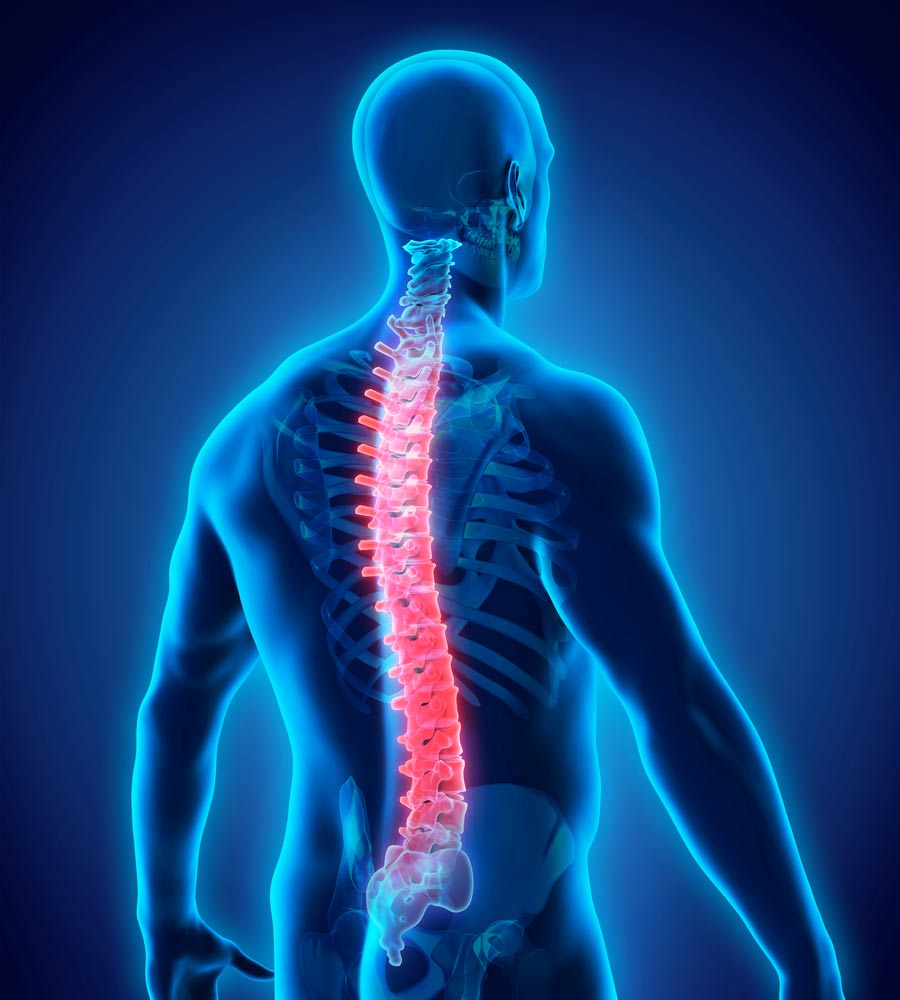
Along with opposable thumbs that we can use to work the TV remotes we invented, one of the things that distinguishes us from many other animals is our spine. The spine provides structural support for our bodies, protection for our central nerves, and facilitates locomotion (aka movement).
The spine is made up of 24 semi-rigid presacral vertebrae (seven cervical, twelve thoracic, five lumbar) separated by discs. Five sacral vertebrae fuse to make up the sacrum, which helps transfer upper body weight to the pelvis through the sacroiliac joint. The coccyx (tailbone) makes up the bottom of the vertebral column.
Intervertebral discs hold vertebrae together, act as shock absorbers, and allow dynamic spinal movement. These discs measure around one centimeter in height and consist of a gooey center (nucleus pulposus) surrounded by connective tissue (annulus fibrosis). (Think of an Oreo with the disc as the filling and the vertebrae as the hard cookies.)
CAUSES OF SPINAL PROBLEMS
Usually, spinal problems are multifactorial. Predisposing factors include:
Poor mobility in surrounding muscles
The pelvis is the foundation for the spine. Decreased mobility in the hips, hamstrings, ankles, and thoracic spine can lead to overcompensation at the lumbar spine and excessive pelvic tilt. This problem is particularly common in women — in part because of higher heels, but also because the connective tissues of an average woman’s spine are usually looser than the average man’s.
Bad biomechanics
Back pain only gets worse with poor biomechanics.
Most spine injuries that occur during training are muscle strains or ligament sprains, usually due to improper loading and technique. A common error is lumbar flexion during movements like good mornings, sit-ups, deadlifts, and rows. Excessive lumbar extension is also dangerous and can lead to vertebral fracture (e.g., finishing a heavy deadlift).
The safest position for the lumbar spine is a neutral position — a natural but not exaggerated S-curve (double check the spine image at the top of this article for reference). You can find a neutral spine by flexing your lumbar spine, then extending it and trying to find the midpoint between the two, or by standing tall and taking a deep breath. Use a mirror to check.
It’s important to get good at the movements you regularly do. If you’re always lunging and twisting for martial arts or your plumbing job, get good at lunging and twisting. Don’t just go home at night and do sit-ups hoping to preserve your back.
Poor posture
If your posture sucks, your back sucks.
Poor posture means higher levels of shear stress on the spine. When posture is appropriate (proud chest, natural lumbar curve, tight core, retracted shoulder blades, etc.) – then we’re able to handle higher amounts of compressive force. Oh, a big gut and high heeled shoes can negatively influence posture. Try to avoid one or both as much as possible.
Weakness
Many people assume that strong abs help them bend and twist. This is true, in part, but most often the core’s role is stability rather than movement — in other words, preventing motion rather than initiating it. Too much flexion or extension at the lumbar spine, usually caused by weak core muscles, can lead to injury. It’s also biomechanically weaker. You can throw a lot farther or punch a lot harder when your hips and shoulders are involved than when you’re just twisting at the waist.
Reliance on weight lifting belts can lead to torso stiffness and weakness.
Imbalances
Folks with chronic back pain often neglect the posterior chain (i.e. the muscles that run along the rear of the body from neck to ankles). This is especially true for gym rats who do too much bench pressing and not enough pulling or hip extension. This keeps back problems in full force (plus said gym rats end up looking like light bulbs).
Single leg exercises help develop the lower body and immediately challenge the lower back and hips, building stability and function. We tend to be weak and imbalanced on extension movements because we do them less.
Not moving
Doctors used to recommend bed rest for back pain. Now they usually recommend movement. And, as you can see from the list of muscle problems above, “too much sitting” factors into a host of back problems.
When we sit or lie around all day, intervertebral discs absorb fluid and become tighter, allowing less range of motion and promoting injury. Introduce yourself to regular movement (warm ups, yoga, and dynamic joint mobility, along with walking and swimming).